 Twitter
  Copy Link
  Email
Email  Facebook

The solar eclipse, a mesmerizing celestial event, offers photographers a rare opportunity to capture the cosmic dance between the sun, the moon, and the Earth. This guide delves into the techniques, equipment, and precautions necessary to photograph the solar eclipse and create unforgettable images.
A solar eclipse occurs when the moon's orbit intersects with the Earth's orbit around the sun, causing the moon to cast its shadow on the Earth. A total solar eclipse reveals the sun's corona in a breathtaking display.
Photographing a solar eclipse requires meticulous planning. Research the eclipse's date, time, and location, and choose a location with minimal light pollution for the best visibility.
After the total solar eclipse on April 8, 2024, the next total solar eclipse that can be seen from the contiguous United States will be on Aug. 23, 2044. We can't normally see the corona – the Sun's outer atmosphere – because the Sun's surface below it is so much brighter. Via NASA
Some of my favorite ways to find low light pollution location include Dark Site Finder and the low light pollution map Light Pollution Map. Personally living in Wisconsin the entire state is full of polited skies. However going into the rural countries away from cities can allow you to capture create skies.
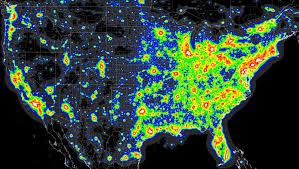
This is the Dark Site Finder. The white, red and orange are HIGHLY pollunted skies centered around cities. The blue, green and grey areas are clearing skies.
Further in this article you can use these dark sky and low pollution ares to find where the moon with be pointing in the sky (direction)
Use a DSLR or mirrorless camera with manual settings, paired with a telephoto lens of at least 300mm. A sturdy tripod is essential to stabilize shots and minimize camera shake.
Night Photography Tripods are essential. Find something sturdy and shake proof. A general tip is to have a shutter delay on your camera between 8 seconds to prevent camera shake. Also
I would reccomend shooting in a timelapse mode to reduce the need to touch the camera and change the composition. This will allow you to get shots faster. Make sure you check your sittings as well.
View Night Photography Tripods

Night Photography Lenses . Having the correct lenses will save you hassle. Consider telephoto lens, wide angle lenses with low aperatures. Check out the BEST lenses for Night Photography
Protect your eyes and camera sensor with certified solar filters or eclipse glasses when photographing the sun.
One of my favorite tools at night to bring with me is a Flashlight (or multiple). You can use them to see through your camera bag and see the ground.

View More Night Photography Safety Tips
Experiment with compositions that include landscapes, silhouettes, or landmarks. Pay attention to the sun and moon's position relative to the horizon.
My absolute favorite tool is the Photographers EPHEMERIS for desktop. I have not used the Mobile app before.
Adjust ISO, aperture, and shutter speed for the perfect exposure. Use a low ISO to minimize noise, a narrow aperture for sharpness, and a fast shutter speed to prevent overexposure.

Capture the eclipse's progression from partial phases to totality, focusing on the patterns of light and shadow. Take multiple shots at varying exposures to capture the perfect image.
Photographing the solar eclipse is a unique opportunity to witness celestial bodies in convergence. With diligent preparation, safety prioritization, and creative exploration, you can capture this extraordinary event in all its glory.